Class 2 Worksheet on Antonyms Learning Sheet

Class 2 Worksheet on Antonyms Learning Sheet
Opposites in Action: Antonym Word Builder for Class 2
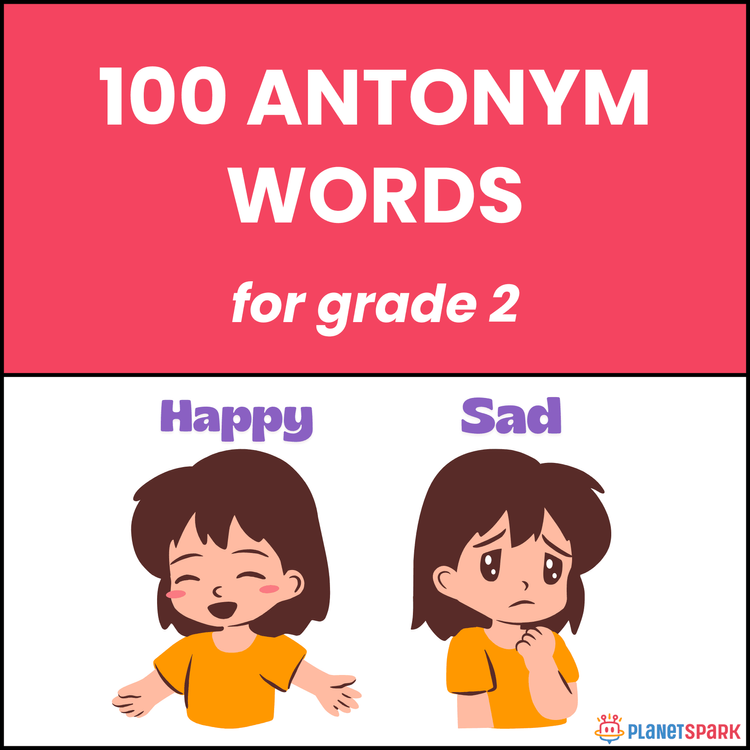
This Grade 2 worksheet helps young learners build a strong vocabulary by practising 100 high-frequency antonym words. It includes a simple, child-friendly list of words where students write the opposite for each one, supporting early grammar and language development in a structured way.
The worksheet focuses on the core concept of antonyms and encourages children to think about how opposite meanings work in everyday language. With clear, list-based tasks spread across multiple pages, learners build confidence as they recognise and recall pairs like big–small, happy–sad, near–far, and many more.
These repeated writing exercises help strengthen spelling, comprehension, and word association skills essential for early language learning.
Ideal for independent practice, homework, or classroom reinforcement.
Exercise – 100 Antonym Words
(Each number corresponds to the worksheet order. All answers provided side-by-side for space.)
Answer Key:
1. Big – Small
2. Happy – Sad
3. Hot – Cold
4. Fast – Slow
5. Tall – Short
6. Clean – Dirty
7. Open – Close
8. Early – Late
9. Light – Heavy
10. Hard – Soft
11. Dry – Wet
12. Loud – Quiet
13. Old – New
14. Day – Night
15. Inside – Outside
16. True – False
17. Full – Empty
18. Sweet – Sour
19. Strong – Weak
20. Sharp – Dull
21. Young – Old
22. Bright – Dark
23. Near – Far
24. Kind – Cruel
25. Safe – Unsafe
26. Neat – Messy
27. Wide – Narrow
28. Above – Below
29. Buy – Sell
30. Push – Pull
31. Brave – Cowardly
32. Now – Later
33. Lazy – Active
34. Day – Night
35. Girl – Boy
36. Kind – Unkind
37. Up – Down
38. Warm – Cold
39. Rich – Poor
40. — Later
(Worksheet repeats “Later” but without a pair; Answer may vary.)
41. Thin – Thick
42. Soft – Hard
43. Front – Back
44. Begin – End
45. Warm – Cool
46. Smooth – Rough
47. Real – Fake
48. Elegant – Clumsy
49. Fierce – Gentle
50. Thick – Thin
51. Busy – Idle
52. Heavy – Light
53. Empty – Full
54. Slow – Fast
55. Short – Long
56. Rude – Polite
57. Deep – Shallow
58. Quite – Loud (Assuming “quiet”)
59. Begin – Finish
60. Down – Up
61. Honest – Dishonest
62. Possible – Impossible
63. Clear – Cloudy / Unclear
64. Mighty – Weak
65. Bright – Dull
66. Gentle – Harsh
67. Healthy – Sick
68. Zero – Many
69. Heavy – Light
70. Float – Sink
71. Bare – Covered
72. Full – Empty
73. Tender – Tough
74. Strong – Weak
75. Rigid – Flexible
76. Bold – Shy
77. Hope – Despair
78. Wide – Narrow
79. Famous – Unknown
80. Grand – Small / Simple
81. Laugh – Cry
82. Unsafe – Safe
83. Dim – Bright
84. Lose – Win
85. Asleep – Awake
86. Seen – Unseen
87. Scattered – Gathered
88. Crowded – Empty
89. Awake – Asleep
90. None – All
91. Safe – Dangerous
92. Novel – Common
93. Pale – Dark
94. Zonal – Global / Overall (Answers may vary)
95. Steady – Unsteady
96. All – None
97. Night – Day
98. Wild – Tame
99. Outside – Inside
100. Closed – Open
Try this worksheet to help your child understand opposites and grow a stronger vocabulary through consistent practice.
Boost your child’s vocabulary skills with structured antonym practice today!
🔖Book a free trial!
Frequently Asked Questions
They help students understand word relationships and improve vocabulary strength.
By matching simple pairs and using antonyms in short sentences.
It supports clearer expression and builds confidence in grammar worksheets.