Class 4 Reading Passage on The Shepherd Boy

Class 4 Reading Passage on The Shepherd Boy
The Boy Who Cried Wolf: Reading Comprehension for Class 4
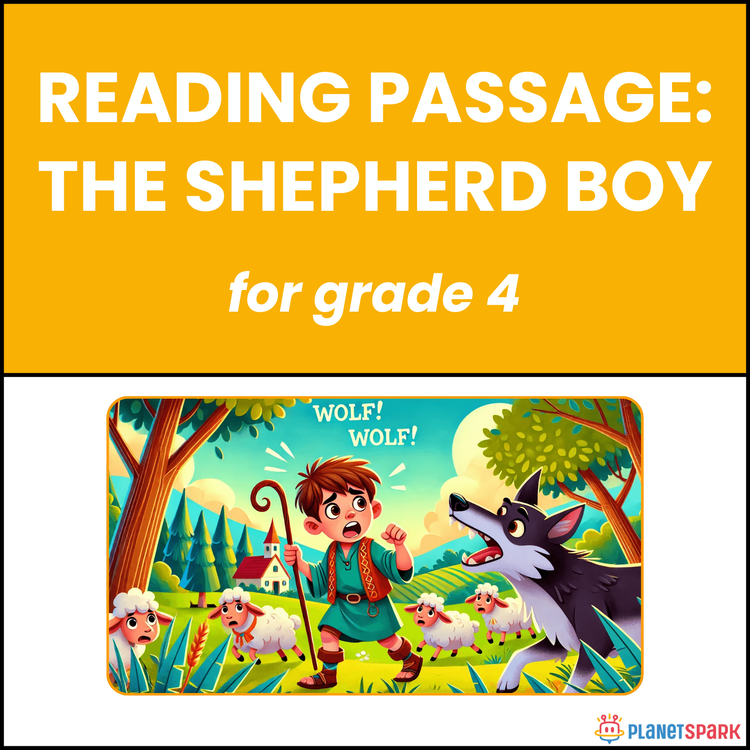
This meaningful Class 4 reading comprehension worksheet, “The Shepherd Boy,” retells the timeless fable about honesty and trust. Through Ramu’s story, children learn how lying can destroy credibility and lead to regret. The exercises help young readers practice understanding, reasoning, and moral reflection, making reading both educational and character-building.
Why Reading Comprehension Matters in Grammar?
1. It helps students connect sentence meaning to real-life lessons and consequences.
2. It builds vocabulary, sequencing, and cause-effect reasoning through engaging storytelling.
3. It reinforces moral understanding through proper sentence structure and emotional tone.
4. It improves both reading fluency and value-based comprehension.
What’s Inside This Worksheet?
The worksheet offers a classic fable paired with comprehension and reflection activities that inspire honesty and critical thinking:
🧠 Exercise 1 – Multiple Choice Questions
Students answer factual questions about Ramu’s actions, his job, and what happened when the real wolf came.
✏️ Exercise 2 – Text-based Questions
Encourages learners to quote exact lines and identify key moral lessons directly from the passage.
📚 Exercise 3 – Higher Order Thinking Questions
Promotes deeper reflection on how lies damage trust, how honesty builds credibility, and what could have changed if Ramu had told the truth.
✅ Answer Key (For Parents & Educators)
Exercise 1 – Choose the Correct Option
1. b) To take care of the village’s sheep and protect them from wolves
2. c) He felt bored and thought it would be fun to play a trick
3. a) Nobody came to help because they thought he was lying again
Exercise 2 – Answer the Following
1. The worried villagers grabbed their sticks and rushed up the hill to help, but found Ramu laughing and saying there was no wolf.
2. Ramu learned that “once you lose people’s trust by lying, they will not believe you even when you tell the truth.”
3. When Ramu cried for help about the real wolf, the villagers “thought, ‘He is lying again,’” and nobody came to help.
Exercise 3 – Think and Connect
1. Ramu’s lies made villagers lose trust in him. When he told the truth later, they ignored his cries for help.
2. Losing trust was serious because it cost him his sheep and his reputation as a responsible boy.
3. If Ramu had been honest from the beginning, the villagers would have helped him and saved the sheep.
4. The word “trust” means confidence or belief in someone’s honesty. OR New title: “How Lying Destroyed the Boy’s Trust.”
Help your child build honesty, reflection, and comprehension skills through timeless stories that shape strong character and confident communication!
🔖Book a free trial!
Frequently Asked Questions
They teach credibility importance, help children understand repeated dishonesty effects, and analyze how actions damage reputation permanently.
They strengthen prediction based on patterns, understanding emotional responses, and recognizing when characters learn lessons too late.
They emphasize truthfulness value, demonstrate community trust dynamics, and show children how false alarms create real dangers.