
Story Conflict Techniques for Stronger Student Writing

Table of Contents
- What Is Story Conflict?
- Why Conflict Matters in Writing
- Types of Story Conflict Students Should Know
- Core Story Conflict Techniques Students Should Master
- Short Story Conflict Techniques: Special Tips for Student Wr
- Story Conflict Techniques Examples for Students
- How to Choose the Right Conflict for Your Story
- Common Mistakes Students Make with Conflict
- How to Practice Story Conflict Techniques
- Why PlanetSpark Is the Best Place for Your Child?
- Build Your Storytelling Confidence with PlanetSpark Support
Every interesting story needs a clear problem or challenge, and that is exactly what story conflict techniques help you create. In this guide, you will learn what conflict means in storytelling, how it works, and easy methods to make your stories more exciting. You will also see simple examples to understand each idea better. Henceforth, PlanetSpark can further support your learning through fun, interactive classes that build strong creative writing skills.
What Is Story Conflict?
Story conflict is the central problem or struggle that the characters face. It drives the plot, builds tension, reveals character traits, and leads the story toward a meaningful conclusion. Conflict can be internal (within a character’s mind) or external (against outside forces).
Every great story starts from fairy tales to modern novels that hinge on a conflict and challenge characters to act, change, or grow.
Why Conflict Matters in Writing
As a student, using strong conflict in your writing helps you:
- Create engaging and vivid stories
- Structure your narrative logically
- Build emotional connection with readers
- Demonstrate creativity and critical thinking
- Improve your grades on writing assignments
Teachers often look for conflict because it shows storytelling skill, deeper thinking, and an understanding of narrative structure.
Types of Story Conflict Students Should Know
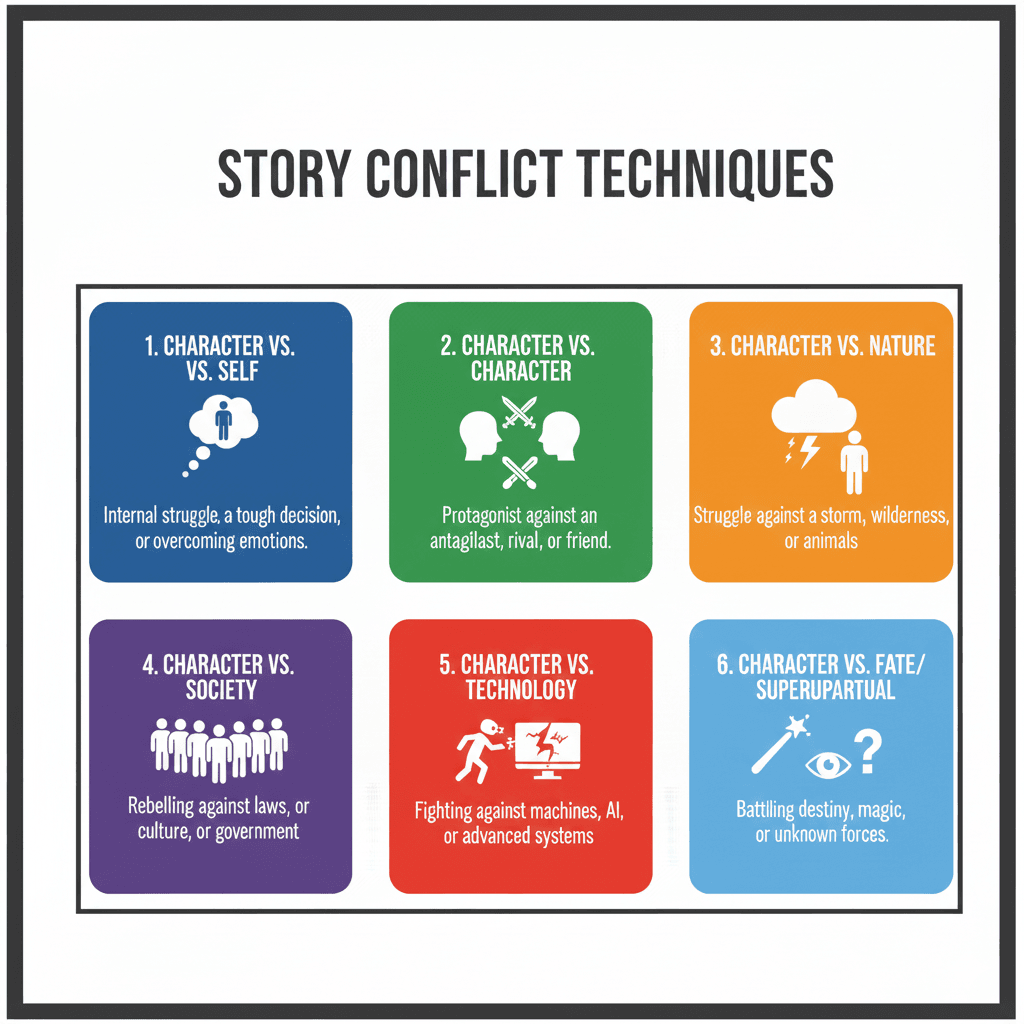
Before exploring story conflict techniques, you must understand the types of conflict you can use. These categories help you choose the most suitable struggle for your characters.
1. Character vs. Self (Internal Conflict)
The character struggles with emotions, decisions, fears, or doubts.
Examples:
- A student decides whether to cheat on an exam or stay honest.
- A hero hesitates to fight because of self-doubt.
2. Character vs. Character
Two characters clash due to goals, beliefs, or personality differences.
Examples:
A detective competes with a rival investigator.
Two friends fight over a misunderstanding.
3. Character vs. Society
The character opposes social norms, rules, or cultural expectations.
Examples:
A teenager rejects unfair school rules.
A rebel fights an unjust government.
4. Character vs. Nature
The character struggles against natural forces like storms, illness, drought, etc.
Examples:
A group of campers gets lost in a forest.
A family fights to save their farm during a flood.
5. Character vs. Technology
Person vs. machines, AI, or scientific creations.
6. Character vs. Supernatural
Ghosts, mythical creatures, curses, or unexplained powers create conflict.
Help Your Child Become a Confident Creative Writer with PlanetSpark!
Core Story Conflict Techniques Students Should Master
Below are the most powerful and effective story conflict techniques you can use. Each technique also includes story conflict techniques examples to deepen your understanding.
1. Establish the Conflict Early
A strong story introduces tension within the first few paragraphs. This hooks readers and sets the narrative direction.
Example:
“Just as Maya stepped into the exam hall, she realised she had forgotten her calculator. The math test had begun.”
This instantly introduces a problem the reader wants to see resolved.
2. Use Rising Tension
Conflict should not stay constant. It must grow, becoming harder and more intense. This technique is called "rising action."
Example:
First, the character loses a clue.
Then, their rival gets ahead.
Next, the teacher announces that the deadline is earlier.
Each event increases pressure.
3. Add Obstacles and Complications
If the conflict is solved too easily, readers lose interest. Create barriers, including physical, emotional, or socia,l that make the character struggle.
Example:
A student tries to apologise to a friend, but the friend avoids them, the phone is stolen, and a class presentation forces them to work together.
4. Use Internal and External Conflict Together
The best stories blend both types. A character might fight not only a physical enemy but also inner fears.
Example:
A boy competes in a race (external conflict) while battling the fear of disappointing his father (internal conflict).
5. Show Consequences
Every decision should lead to consequences, good or bad. This creates realism and deepens conflict.
Example:
If a character lies, they lose trust.
If they skip practice, they perform poorly.
6. Use Time Pressure
A countdown adds urgency and heightens conflict.
Example:
A girl must finish her science project in one night after her model breaks.
7. Increase Stakes
Stakes answer the question: What does the character stand to lose?
High stakes make conflict exciting.
Example:
If the protagonist fails to win the scholarship, they can’t attend college.
8. Add Surprising Twists
Unexpected events keep readers engaged and shift the direction of conflict.
Example:
Just when the hero finds the treasure map, their best friend steals it.
9. Use Dialogue to Reveal Conflict
Arguments, misunderstandings, and emotional conversations build tension naturally.
Example:
“Why didn’t you tell me the truth earlier?”
“Because I didn’t think you’d believe me!”
10. Build Flawed Characters
Perfect characters make conflict weak. Flawed characters create richer stories.
Example:
A hero with anger issues loses allies.
A shy girl misses opportunities because she won’t speak up.
Give Your Child Access to Fun, Structured Creative Writing Classes
11. Make the Antagonist Strong
A strong opponent forces the protagonist to grow.
Example:
An intelligent rival who always seems one step ahead.
12. Use Symbolic Conflict
Events or objects can represent deeper struggles.
Example:
A storm symbolises internal chaos.
A broken watch symbolises lost time or regret.
13. Give the Character a Moral Dilemma
When a character must choose between two difficult options, the conflict becomes more meaningful.
Example:
Save a friend or finish an important mission?
14. Let Conflict Reveal Character Growth
As the conflict intensifies, the protagonist should evolve, learning lessons or gaining strength.
Example:
A fearful student becomes confident after facing multiple setbacks.
15. Create a Climactic Moment
This is the peak of conflict, where everything comes together.
Example:
The hero confronts the villain.
The student faces their biggest fear on stage.
16. Resolve Conflict Meaningfully
Conflict resolution should feel earned, not forced. The character must solve the problem using lessons learned from the journey. Students interested in making their character memorable than click here.
Short Story Conflict Techniques: Special Tips for Student Writers
Short stories require sharper, quicker, more focused conflict. Here are techniques specifically for writing strong short stories:
1. Start the conflict in the first paragraph
Short stories don’t have space for slow build-ups.
2. Focus on one main conflict
Too many plots make the story messy.
3. Use strong emotions
Fear, anger, excitement, and guilt instantly deepen conflict.
4. Keep the cast small
One or two central characters and one clear conflict keep the story tight.
5. Use symbolism
Objects or events can quickly communicate conflict in short stories.
6. End with impact
Short stories often end with a twist, realisation, or emotional punch.
Spark Creativity and Build Confident Young Writers with PlanetSpark Programs
Story Conflict Techniques Examples for Students
Find simple examples provided to help students understand storytelling patterns, improve creativity, and practice building stronger narratives through clear, easy-to-follow samples designed for learning and skill growth.
Example 1: Internal Conflict
“Asha wanted to confess she broke the vase, but fear twisted her stomach. What if her mother never trusted her again?”
Example 2: External Conflict – Rivalry
“Ravi ran faster, but Arjun sprinted ahead, flashing a victorious smirk. The trophy was slipping away again.”
Example 3: Conflict With Nature
“The boat rocked violently as waves crashed into it. Meera held the oars, praying the storm would pass.”
Example 4: Conflict With Society
“No one in the village believed Ritu could become an engineer, but she refused to give up on her dream.”
Example 5: Moral Dilemma
“Should he submit the project his friend helped him cheat on, or admit the truth and fail?”
How to Choose the Right Conflict for Your Story
Choose a conflict that suits your character’s journey and matches the tone of your story. Pick something clear, meaningful, and strong enough to keep readers engaged from start to end. Here, students can also learn to create suspense in their story by clicking this link.
Ask yourself:
- What emotion do I want to create: fear, excitement, sadness, or curiosity?
- What lesson should my character learn?
- What will keep my reader hooked from the beginning?
- Is this conflict realistic for the setting, character age, and situation?
Common Mistakes Students Make with Conflict
Avoid these:
- Conflict is solved too quickly
- Characters make no effort to overcome problems
- The stakes are too low
- Conflict feels random, not connected to the plot
- No clear climax
- Antagonists are weak or unrealistic
- Characters don’t change after the conflict
How to Practice Story Conflict Techniques
Many students struggle with conflict when the problem feels weak, rushed, or disconnected from the story. A strong conflict needs effort, tension, and change to make the plot meaningful and exciting.
Try these simple activities:
- Write a story starting with a problem in the first line.
- Create a character with a flaw and build a conflict from it.
- Rewrite your favourite story by changing the central conflict.
- Write a short story using a timer to create urgency.
Why PlanetSpark Is the Best Place for Your Child?
PlanetSpark helps children grow into confident, creative writers through personalised coaching, fun writing activities, AI-powered feedback, and engaging tools. Kids learn to express ideas clearly, build strong stories, improve vocabulary, and enjoy writing with guided support and real learning opportunities.
Key Creative Writing–Focused Services
- 1:1 personal trainers for personalised writing guidance
- Customised learning roadmaps to improve grammar, structure, and creativity
- SparkX AI video analysis to improve storytelling and presentation
- AI-led practice sessions for independent speaking and story narration
- Spark Diary for building daily writing habits
- Gamified learning tools like quizzes and challenges for vocabulary and grammar
- Regular performance reports with detailed writing evaluation
- Learning clubs such as the Story Writing Club and the Writers Guild
- SparkBee for daily grammar, spelling, and vocabulary practice
- SparkShop ebooks for grammar, reading, and writing
- Contests and showcases for real-world writing and storytelling experience
These tools and activities help children grow into confident, imaginative, and skilled creative writers.
Build Your Storytelling Confidence with PlanetSpark Support
To sum it up, conflict is the driving force that gives every story direction and purpose. When students understand how challenges shape characters and create movement, their stories become more engaging and meaningful.
Learning different conflict techniques also helps young writers think clearly, plan better, and build narratives that feel real and exciting. With practice, they develop confidence in creating tension, emotion, and strong character growth.
By exploring various conflict styles and applying them in simple ways, students can strengthen their storytelling and bring more depth to their ideas. With time and creativity, they can craft stories that hold attention and leave a lasting impression.
Frequently Asked Questions
Story Conflict Techniques are methods used to create challenges or problems in a story. They make plots engaging, build tension, develop characters, and keep readers interested from beginning to end.
Conflict gives stories direction, purpose, and emotion. It helps characters grow and makes the plot more exciting, helping students write stronger, clearer, and more meaningful narratives.
Students can start the conflict early, raise tension, add obstacles, use emotions, and craft realistic challenges. These steps help create more engaging and well-structured short stories
PlanetSpark teaches conflict-building through guided storytelling sessions, writing activities, and personalised feedback. Students learn to create strong plots, emotional depth, and character growth through expert-led support.
Yes, PlanetSpark builds storytelling confidence through 1:1 training, interactive tasks, and creative writing practice. Kids learn how to develop conflict, structure plots, and express ideas clearly and confidently.
Students often add weak challenges, resolve conflict too quickly, or skip emotional depth. Practising rising tension, meaningful obstacles, and character reactions helps create stronger story conflict.