
Dramaturgy Basics Every Creative Student Learns at PlanetSpark


Table of Contents
- What Is Dramaturgy? A Foundational Explanation
- Dramaturgy Definition in Simple and Academic Terms
- Dramaturgy Meaning for Students and Beginners
- Dramaturgical Thinking and Narrative Logic
- Defining Dramaturgy Through Story Structure
- What Is Dramaturgy in Performance and Communication?
- Dramaturgy and Character Development
- Dramaturgy in Literature, Film, and Digital Media
- Learning Dramaturgy as a Creative and Cognitive Skill
- Shreesh’s Creative Journey Powered by PlanetSpark
- Common Misconceptions About Dramaturgy
- Why PlanetSpark Is the Best Place to Build Exceptional Skill
- Shape Stories, Sharpen Thinking, Shine with PlanetSpark
Dramaturgy is the art and study of how stories, performances, and ideas are thoughtfully structured to create meaning and impact. It helps students understand narrative flow, character motivation, and audience engagement across writing and speaking. This guidance provides clear insight into dramaturgical concepts, practical applications, and creative thinking skills. With expert-led learning and interactive practice, PlanetSpark helps students engage in exploring dramaturgy, building confidence, clarity, and strong communication skills that support academic and creative growth.
What Is Dramaturgy? A Foundational Explanation
When students ask what is dramaturgy, they are essentially asking how stories are designed to work. Dramaturgy is the study of dramatic structure, narrative logic, and the relationship between a story and its audience. It focuses on how events are arranged, how characters behave, and how meaning is created over time.
To define dramaturgy most simply, it can be described as the framework behind storytelling. It looks at why scenes are placed in a certain order, how tension is built, and how ideas are revealed gradually.
Core ideas behind what is dramaturgy:
Stories are constructed intentionally, not randomly
Every scene or moment serves a purpose
Characters drive the narrative through choices
Audience understanding and emotion matter
Dramaturgy applies not only to plays but also to films, novels, speeches, debates, and even everyday storytelling.
Dramaturgy Definition in Simple and Academic Terms
The dramaturgy definition can vary depending on context, but its core remains consistent. Academically, dramaturgy refers to the art and theory of dramatic composition. Practically, it is the method used to analyse and structure narratives.
To further define dramaturgy, students can think of it as a lens through which stories are examined and improved. It asks critical questions about coherence, relevance, and impact.
Key aspects of the dramaturgy definition:
Plot organisation and sequencing
Character motivation and transformation
Thematic consistency
Emotional rhythm and pacing
Understanding the dramaturgy definition allows students to move from passive reading or watching to active analysis. Students can click this learn zeugma meaning and their usage in writing from PlanetSpark professional.
Dramaturgy Meaning for Students and Beginners
The dramaturgy meaning becomes clearer when connected to student learning. For beginners, dramaturgy explains how ideas turn into structured expression. It shows how stories guide attention, shape emotions, and communicate messages.
In simple terms, dramaturgy's meaning involves understanding:
How beginnings set expectations
How conflicts create interest
How endings deliver resolution or insight
Why dramaturgy meaning matter for students?
It improves clarity of thought
It strengthens narrative writing
It develops analytical skills
It encourages empathy through character study
Rather than memorising theory, students benefit most when they see dramaturgy as a thinking process they can apply across subjects.
Help your child transform imagination into powerful stories through PlanetSpark’s creative writing courses!
Dramaturgical Thinking and Narrative Logic
The term dramaturgical describes the techniques and decisions used to shape a story. Dramaturgical thinking trains students to look beneath the surface of a narrative and examine how it functions.
Dramaturgical analysis asks questions such as:
Why does this scene exist?
What changes because of this moment?
How does this action move the story forward?
Common dramaturgical elements:
Conflict and stakes
Cause-and-effect progression
Emotional highs and lows
Character-driven action
By learning dramaturgical thinking, students gain control over how stories unfold.
Defining Dramaturgy Through Story Structure
To define dramaturgy practically, story structure plays a central role. Dramaturgy explains how narratives are organised to maintain interest and deliver meaning.
Most dramaturgical models include:
A beginning that establishes context
A middle where complications arise
An ending that resolves or reframes the conflict
Popular dramaturgical structures studied by students:
Three-act structure
Linear versus non-linear narratives
Journey or transformation arcs
These structures are not rules but tools that help writers and performers make intentional choices.
Build your child’s storytelling, expression, and writing confidence with PlanetSpark!
What Is Dramaturgy in Performance and Communication?
Beyond writing, what is dramaturgy in performance and communication? It refers to how ideas are presented through voice, movement, timing, and interaction with an audience.
In spoken or performed communication, dramaturgy involves:
Sequencing ideas logically
Using pauses and emphasis effectively
Aligning emotion with the message
Dramaturgical skills in communication:
Clear introductions and conclusions
Purposeful transitions
Awareness of audience response
These skills are valuable in debates, presentations, interviews, and public speaking contexts. Students interested in learning diegetic meaning and want to learn how to apply in their story can click this link.
Dramaturgy and Character Development
Character development is one of the most important applications of dramaturgy. Dramaturgy helps students understand characters as purposeful agents rather than flat figures.
Through dramaturgical analysis, students explore:
Goals and desires
Obstacles and conflicts
Moral choices
Growth and change
This approach deepens both creative writing and critical reading skills.
Inspire your child to think creatively and express ideas confidently with PlanetSpark’s guided learning!
Dramaturgy in Literature, Film, and Digital Media
Dramaturgy is not limited to stage plays; it plays a crucial role in literature, cinema, and digital storytelling. When students analyse novels, films, or web series, they are often engaging in dramaturgical thinking without realising it.
In literature, dramaturgy helps readers understand plot progression, narrative voice, and thematic development. In films, it explains pacing, visual storytelling, and emotional impact. In digital media, dramaturgy guides content flow and viewer engagement.
Applications of dramaturgy across media:
Analysing story arcs in novels and short stories
Understanding screenplay structure in films
Evaluating tension and pacing in episodic content
Designing engaging narratives for digital platforms
Recognising dramaturgy across formats helps students become more critical consumers and thoughtful creators of media.
Learning Dramaturgy as a Creative and Cognitive Skill
Dramaturgy is both a creative and cognitive discipline. It blends imagination with logic, emotion with structure. Students who study dramaturgy learn how to balance creativity with reasoning, which strengthens overall academic performance.
From a cognitive perspective, dramaturgy trains students to analyse cause-and-effect relationships, identify patterns, and evaluate outcomes. From a creative perspective, it encourages original thinking, experimentation, and expressive confidence.
Key learning outcomes of dramaturgy:
Enhanced storytelling ability
Improved critical thinking and reasoning
Better audience awareness
Stronger expressive and interpretive skills
By mastering dramaturgy basics, students gain tools that remain useful across academic subjects and creative pursuits.
Shreesh’s Creative Journey Powered by PlanetSpark
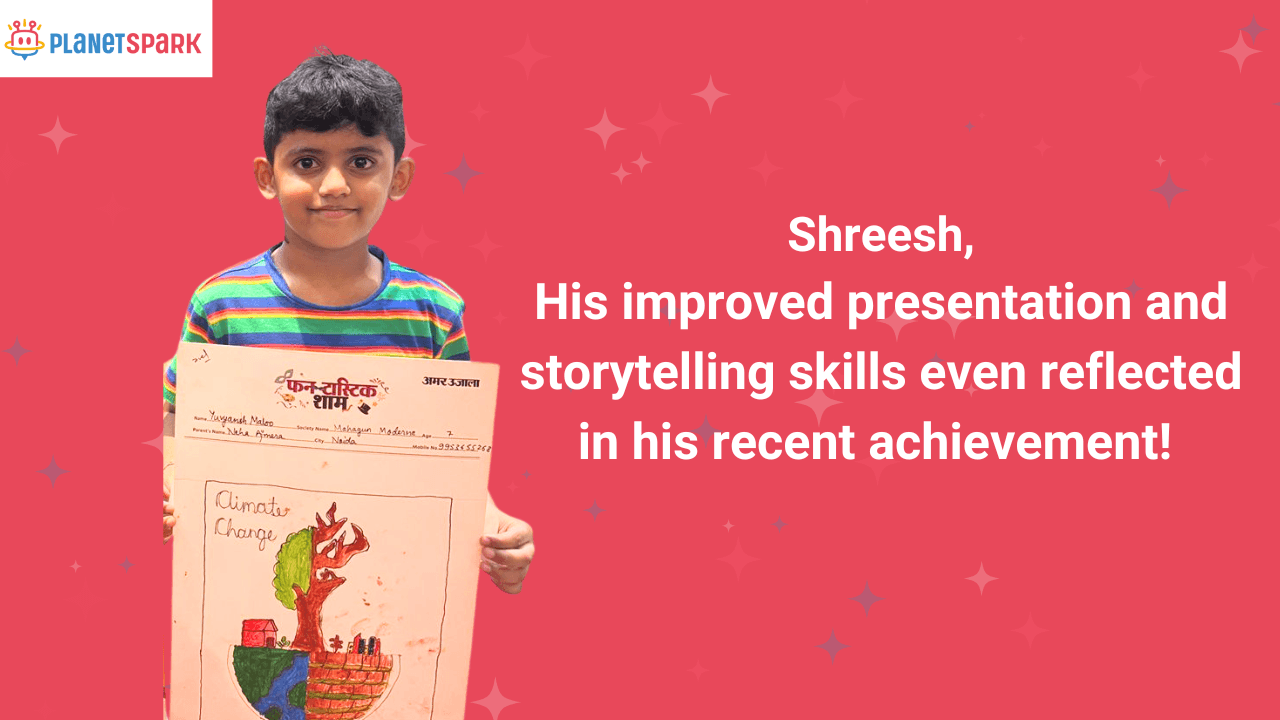
PlanetSpark has helped Shreesh express his ideas creatively and confidently. His improved presentation and storytelling skills are even reflected in his recent achievement — winning second place in the Junior Category of a drawing competition on ‘Climate Change’ organised by the Amar Ujala team.
If you want your child to build creativity, confidence, and strong communication skills like Shreesh, join PlanetSpark and help them turn ideas into impactful expression.
Common Misconceptions About Dramaturgy
Despite its importance, dramaturgy is often misunderstood, especially by beginners. One common misconception is that dramaturgy is only relevant to theatre or acting. In reality, dramaturgy applies to any form of storytelling or structured communication, including writing, speaking, and media creation.
Another misunderstanding is that dramaturgy restricts creativity. Many students believe structure limits imagination, but dramaturgy actually supports creativity by giving ideas a clear direction and purpose. It helps creators shape raw ideas into coherent, impactful narratives rather than limiting originality.
Some also assume dramaturgy is overly theoretical or difficult to learn. While it has academic roots, dramaturgy is a practical skill that improves with observation, analysis, and practice.
Clarifying common misconceptions:
Dramaturgy is not limited to theatre or stage performance
It enhances creativity instead of restricting it
It is useful across academic and real-life communication contexts
It is a learnable and practical analytical skill
Understanding these misconceptions allows students to approach dramaturgy with confidence and use it as a tool for clearer thinking and stronger expression.
Why PlanetSpark Is the Best Place to Build Exceptional Skills
PlanetSpark offers a complete learning ecosystem that helps children become confident, expressive, and imaginative writers. With expert-led classes, AI-powered tools, and engaging activities, students don’t just learn writing—they master the art of storytelling, clarity, structure, and creativity. Here’s how PlanetSpark transforms every child into a skilled young author:
What PlanetSpark Offers for Creative Writing Excellence
1:1 Personal Trainers who guide children through grammar, storytelling, vocabulary, and expression
Personalised Writing Curriculum tailored to your child’s level, goals, and pace
Spark Diary for daily writing practice that builds consistency and creativity
Genre-Based Learning covering stories, poems, essays, book reviews, speeches, and more
Creative Stimulus Activities like story dice, picture prompts, and imagination games
Real Publishing Opportunities through blogs, e-magazines, anthologies, and showcases
SparkX AI Video Analysis to refine delivery when presenting written work
Gamified Tools like SparkBee and quizzes that strengthen grammar, vocabulary, and spelling
PlanetSpark ensures your child not only writes better but thinks sharper, imagines deeper, and communicates with confidence that lasts a lifetime.
Shape Stories, Sharpen Thinking, Shine with PlanetSpark
To conclude, learning dramaturgy empowers students to understand how stories, performances, and ideas are thoughtfully constructed. By exploring dramaturgy's meaning, mastering dramaturgical thinking, and confidently defining dramaturgy, students develop clarity, creativity, and critical insight that strengthen both academic and expressive skills.
Dramaturgy extends beyond theatre into writing, speaking, literature, and digital media. When students learn what is dramaturgy and how it shapes communication, they become better storytellers, sharper thinkers, and more confident presenters across real-life situations.
At PlanetSpark, students are guided to apply dramaturgy in a practical, engaging way that builds confidence and creativity. Through structured learning and hands-on practice, PlanetSpark helps young learners turn ideas into impactful expression and grow into effective communicators ready to succeed on every stage.
Frequently Asked Questions
Dramaturgy is the study of how stories are structured and presented. It helps students understand plot, character development, and audience impact in drama, writing, films, and effective communication.
Dramaturgy helps students organise ideas clearly, analyse narratives deeply, and express thoughts creatively. It strengthens storytelling, critical thinking, and communication skills useful in academics, performances, and real-life situations.
Creative writing focuses on producing stories, while dramaturgy analyses how stories work. Dramaturgy examines structure, purpose, and audience response, helping students improve and refine their creative writing effectively.
Yes, dramaturgy applies to literature, films, speeches, debates, and digital media. It helps students understand narrative flow, emotional pacing, and clarity, making communication more impactful across various academic and creative fields.
PlanetSpark teaches dramaturgy through interactive storytelling, speaking activities, and guided practice. Students learn to apply dramaturgical concepts practically, improving confidence, creativity, and communication skills in an engaging learning environment.
PlanetSpark combines structured learning with creativity, helping students master dramaturgy concepts while building speaking and writing confidence. Its expert mentors and activity-based approach make complex ideas easy and enjoyable to learn.