
Positive Communication Patterns for Confident Students

Table of Contents
- What Are Positive Communication Patterns?
- Why Positive Communication Matters for Students
- Understanding the Core Elements of Positive Communication
- Positive Communication Skills Examples for Students
- Positive Communication Patterns in School and College
- How to Build Positive Communication Patterns: A Step-by-Step
- Common Communication Mistakes Students Make (and How to Fix
- Positive Communication in Conflict Situations
- Real-Life Positive Communication Pattern Examples
- Benefits of Positive Communication Patterns for Students
- Why PlanetSpark Is the Ultimate Learning Platform
- Final Step Toward Stronger Communication with PlanetSpark
Positive communication patterns are simple yet powerful habits that help students share ideas clearly, listen with interest, and connect meaningfully with others. Here you will explore practical ways to build these patterns and use them confidently in everyday situations. With engaging activities and expert guidance, PlanetSpark helps students strengthen communication skills, boost confidence, and express themselves with clarity and positivity in every conversation.
What Are Positive Communication Patterns?
Positive communication patterns are habits, behaviours, and strategies that make interactions respectful, clear, and supportive. They help conversations flow smoothly and reduce misunderstandings, conflicts, and confusion.
These patterns include:
- Listening actively
- Thinking before speaking
- Using respectful words
- Asking open-ended questions
- Clarifying doubts
- Giving constructive feedback
- Managing emotions
- Showing empathy
- Maintaining appropriate tone and body language
When these habits become part of your daily communication, people feel safe and comfortable sharing their thoughts with you. This leads to better teamwork, healthier friendships, and a more confident personality.
Students often think communication is only about speaking well. But positive communication is equally about listening, observing, and understanding.
Why Positive Communication Matters for Students
Positive communication helps students express ideas clearly, build strong connections, and manage emotions effectively. It supports learning, boosts confidence, and prepares young minds for future academic and professional success.
1. It Improves Academic Performance
Good communication helps you understand lessons clearly, participate actively in class, ask questions confidently, and express ideas during discussions. Students who communicate well often perform better in group work, presentations, and written tasks.
2. It Strengthens Friendships
Positive communication reduces arguments and misunderstandings. It helps you connect with others, resolve conflicts peacefully, and maintain supportive friendships.
3. It Builds Confidence
When you express your thoughts clearly and respectfully, you feel more self-assured. Confidence increases your willingness to participate in debates, activities, competitions, or leadership roles.
4. It Helps in Career Development
Even though you’re still in school or college, communication skills will eventually determine how well you perform during interviews, internships, or professional interactions.
5. It Improves Emotional Intelligence
Communication is deeply connected to how you handle your emotions and others. Being calm, clear, and empathetic helps reduce stress and improve emotional balance. Students interested to know about Intrapersonal communication can click this link.
Help your child communicate boldly through PlanetSpark’s engaging activities, AI tools, and personalised coaching.
Understanding the Core Elements of Positive Communication
To build positive communication patterns, you must understand the building blocks behind them. These elements guide how you express yourself and how others perceive you.
1. Clarity
Speak in a simple, structured, and understandable way. Avoid unnecessary confusion or vague expressions.
Example:
Instead of saying, “I don’t get it,” say, “I don’t understand the second step of this equation. Can you explain it again?”
2. Respect
Respectful communication means using polite words, listening without interrupting, and acknowledging others’ opinions even if you disagree.
3. Empathy
This is the ability to understand someone else’s feelings. It helps you respond kindly and avoid hurting others.
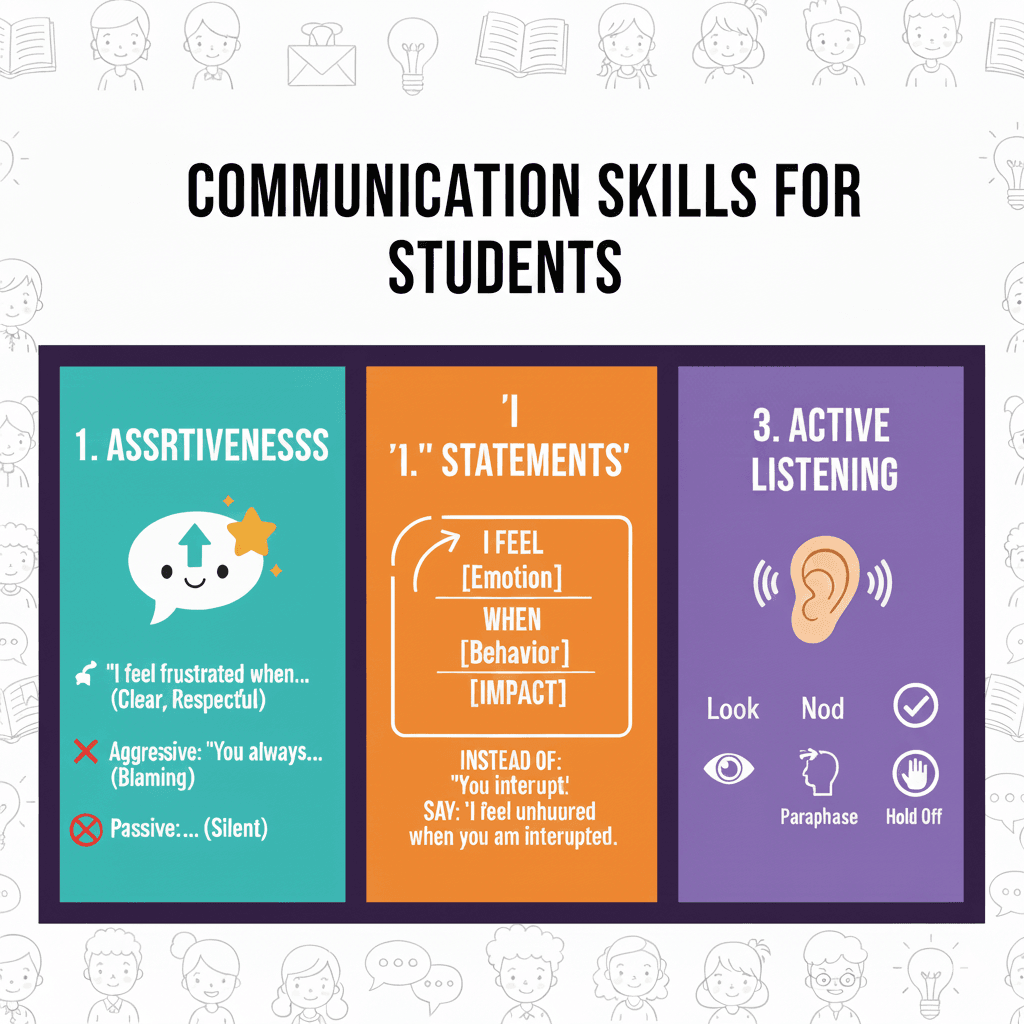
4. Active Listening
Listening is not just staying silent. It includes nodding, making eye contact, asking follow-up questions, and showing interest.
5. Assertiveness
Assertive communication is expressing your needs and ideas confidently without being rude or aggressive.
6. Positive Body Language
Smiling, maintaining eye contact, sitting upright, and nodding show confidence and attention.
Positive Communication Skills Examples for Students
Here are simple and practical positive communication skills examples that you can use every day:
1. Using Polite Phrases
- “Could you please explain that again?”
- “Thank you for helping me.”
- “I appreciate your effort.”
2. Asking Clear Questions
- “What do you mean by this chapter’s theme?”
- “Can you show me how to solve this step?”
3. Listening Before Responding
- Pausing for two seconds before replying
- Not interrupting
- Taking notes while listening
Give your child the advantage of strong speaking and storytelling skills with PlanetSpark’s proven learning system.
4. Giving Constructive Feedback
- “You explained that really well. Maybe you could add an example for clarity?”
5. Staying Calm During Conflicts
- “I understand how you feel. Let’s figure out a solution.”
6. Clarifying Doubts Immediately
- “I’m not sure I understood the instructions. Can you repeat them?”
7. Showing Empathy
- “You seem stressed. Want to talk about it?”
- “I’m sorry that happened. How can I help?”
8. Using “I” Statements
- “I feel overwhelmed when the project instructions are unclear.”
9. Maintaining Eye Contact
This shows confidence and attentiveness during conversations.
10. Summarising What You Heard
- “So what you're saying is we must complete the introduction first, right?”
These small behaviours make communication smoother, kinder, and more effective. Students interested to learn about the advantages of multilingualism for more knowledge than click here.
Positive Communication Patterns in School and College
Communication patterns differ based on the environment. A student needs to adapt these patterns to classroom settings, group discussions, extracurricular activities, and more.
1. In the Classroom
- Ask questions politely.
- Don’t mock others’ answers.
- Share your ideas clearly.
- Respect the teacher’s time and instructions.
- Participate without dominating the discussion.
2. In Group Projects
- Divide tasks fairly.
- Communicate openly about issues.
- Listen to everyone’s ideas.
- Respect deadlines.
- Appreciate teammates’ efforts.
Positive communication in group work prevents conflicts and improves project results.
Build your child’s communication foundation with interactive lessons that make learning fun, structured, and effective.
3. With Friends
- Be honest but not hurtful.
- Listen when they share feelings.
- Apologise when necessary.
- Avoid gossip.
- Support them during tough times.
4. During Presentations
- Use confident body language.
- Speak clearly and loudly.
- Maintain eye contact.
- Use simple words and structured ideas.
- Answer questions patiently.
5. On Social Media
- Avoid sarcastic or offensive comments.
- Think before replying.
- Respect others’ opinions.
- Don’t spread negativity or rumours.
How to Build Positive Communication Patterns: A Step-by-Step Guide
Developing strong communication habits takes time, but with consistency, any student can become a confident communicator.
Step 1: Start with Self-Awareness
Take note of how you normally talk. Do you interrupt? Do you sound rude without meaning to? Are you nervous while speaking?
Recognising your flaws is the first step to improving.
Step 2: Practice Active Listening Daily
Try these small habits:
- Look at the person speaking
- Nod to show understanding
- Avoid distractions
- Don’t prepare your reply while the other person is talking
Listening more will naturally make your communication better.
Step 3: Slow Down Before Speaking
Students often speak quickly, especially when nervous. Slow down to organise your thoughts. This reduces confusion and mistakes.
Step 4: Use Positive Words
Replace negative, aggressive, or complaining phrases with supportive ones.
For example:
- Instead of “You’re wrong,” say “Let’s look at this differently.”
Step 5: Control Tone and Body Language
Sometimes your words may be polite, but your tone sounds irritated. Paying attention to tone changes how people interpret your message.
Step 6: Ask Questions
Questions help you understand better and show that you’re involved in the conversation.
Step 7: Develop Empathy
Imagine yourself in the other person’s place. This prevents misunderstandings and builds stronger relationships.
Step 8: Practice Assertiveness
Assertiveness is not being loud or demanding. It means expressing yourself honestly and respectfully.
Step 9: Accept Feedback
Good communicators are open to correction. When someone gives you feedback, view it as an opportunity to improve.
Step 10: Practice Daily
Communication is a skill, like sports, coding, or drawing. The more you practice, the more confident you become.
Let PlanetSpark guide your child toward confident conversations, better expression, and stronger speaking skills.
Common Communication Mistakes Students Make (and How to Fix Them)
Here are mistakes you might not realise you’re making and easy ways to correct them.
1. Interrupting Constantly
Fix: Count to two after the other person stops speaking.
2. Speaking Aggressively or Too Directly
Fix: Rephrase with polite and softer words.
3. Not Listening Fully
Fix: Focus on the speaker’s words instead of preparing your answer.
4. Avoiding Eye Contact
Fix: Practice making eye contact for 2–3 seconds at a time.
5. Being Defensive During Feedback
Fix: Pause, breathe, and say: “Thanks for the feedback.”
6. Assuming Instead of Asking
Fix: Always clarify doubts.
Positive Communication in Conflict Situations
Conflicts are normal, especially among students. But positive communication can turn arguments into opportunities for learning.
Here’s how:
1. Stay Calm
Don’t react instantly. Breathe and think before speaking.
2. Use “I” Statements Instead of Blame
- “I felt hurt when…”
- “I think we misunderstood each other.”
3. Listen Without Interrupting
Let them finish their explanation.
4. Suggest Solutions Instead of Complaints
- “How about we divide the work differently?”
5. Apologise When Needed
Saying sorry doesn’t make you weak. It shows maturity.
Strengthen your child’s communication skills with expert-led sessions designed to boost fluency, expression, and confidence.
Real-Life Positive Communication Pattern Examples
Here are scenarios where you can apply positive communication:
Scenario 1: Group Study
Instead of saying,
“Your explanation makes no sense.”
try
“I’m a bit confused. Can you explain that part again?”
Scenario 2: Classroom
Instead of remaining silent,
ask,
“I didn’t understand the first step. Could you go over it again?”
Scenario 3: With Friends
Instead of reacting angrily,
say,
“I felt upset when you cancelled our plan without telling me.”
Scenario 4: With Teachers
Instead of being nervous,
say confidently,
“Could you please help me understand where I went wrong in this assignment?”
These positive communication pattern examples show how simple changes can transform conversation quality.
Benefits of Positive Communication Patterns for Students
Positive communication patterns help students grow academically, socially, and emotionally. They make learning easier, strengthen connections, and build essential life skills that support success in classrooms, friendships, and future careers.
- Better academic performance
- Stronger relationships
- Higher confidence
- Improved teamwork
- Smoother conflict resolution
- Better emotional control
- Leadership ability
- Clearer thinking
- Stronger presentation skills
- Reduced stress and misunderstandings

Why PlanetSpark Is the Ultimate Learning Platform
PlanetSpark offers a complete, future-ready learning experience designed to build strong communication skills, public speaking confidence, and powerful self-expression in every child. With expert-led 1:1 classes, AI-powered tools, engaging clubs, and real-time performance opportunities, PlanetSpark ensures measurable growth and long-lasting confidence.
Here’s what PlanetSpark provides:
- 1:1 Personal Communication Trainers for fluency, confidence, storytelling, writing, and grammar
- Personalised Learning Roadmap tailored to each child’s skill level and progress
- AI Video Analysis (SparkX) to track body language, voice, structure, and clarity
- AI-Led Speaking Practice Sessions for speeches, prompts, and storytelling
- Digital Spark Diary to build strong writing habits
- Gamified Learning Modules for grammar, vocabulary, spelling, and listening
- Communication and Public Speaking Clubs, including Debate, Story Writing, Podcasting, and Poetry
- Safe Sharing Space (Sparkline) for posting performances
- Competitions, Showcases, and Recognition Events to boost stage confidence
- SparkBee and SparkShop for daily practice, quizzes, and digital learning resources
- 1:1 Public Speaking Coaching with structured modules, TED-style training, debates, and global peer interaction
PlanetSpark transforms children into confident speakers, creative thinkers, and powerful communicators ready for every stage of life.
Final Step Toward Stronger Communication with PlanetSpark
Positive communication patterns are essential for every student. They shape your personality, boost your confidence, strengthen relationships, and improve academic and professional performance. Communication is not just about speaking; it is about listening, understanding, expressing, and connecting meaningfully with others.
By practising simple and effective habits like active listening, respectful speaking, empathy, asking questions, and using positive body language, you can transform the way you interact with people. The more you practice these skills, the more natural and powerful they become.
Remember, communication shapes your life. Build it wisely.